
Which shipping charges should be clearly included in a CIF quotation?
- VIP-User
- 2026-09-30
- 5
A Cost, Insurance, and Freight (CIF) quotation must clearly include the unit product cost, export customs clearance charges, origin port handling fees, main maritime or air transport freight to the named destination port, and minimum cargo insurance coverage. Destination port unloading, import customs duties, and inland delivery costs are explicitly excluded from a standard CIF agreement.
Core Solutions & Key Takeaways
- Product and Origin Logistics Cost: The quote must factor in factory production costs, standard export packaging, and inland transport from the manufacturing plant to the loading port.
- Export Compliance and Terminal Fees: All origin-side expenses—including export documentation, customs declaration, and Terminal Handling Charges (THC)—must be covered by the seller.
- Main International Carriage: Freight charges for ocean vessel or international air transport up to the agreed port of discharge must be itemized or fully integrated into the total CIF rate.
- Mandatory Cargo Insurance: Minimum marine insurance coverage (typically 110% of the CIF value) must be secured by the seller to protect goods during transit across primary market routes.
Detailed Architectural/Principle Analysis
A CIF agreement establishes clear boundaries for cost responsibility between exporters and overseas buyers. Exporters managing international shipping schedules must break down costs into three distinct pillars: Product Cost (C), Cargo Insurance (I), and Ocean Freight (F). For specialized medical and wellness equipment—such as the BW-608-A Health capsule (Infrared Dry Sauna Capsule) featuring Graphene heating, 660nm+850nm red light therapy, and PEMF functionality—proper CIF pricing ensures full protection during transit to target international markets.
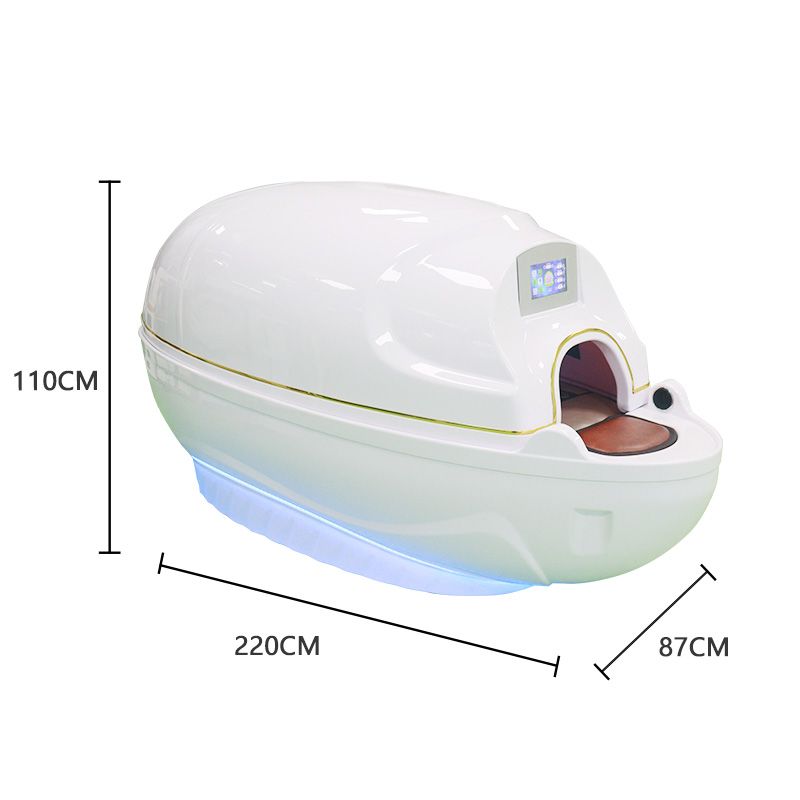
Operational logistics for international orders managed by Guangzhou Beautywellness Health Technology Co., Ltd. illustrate how export standards apply to CIF terms. With an export ratio reaching 80% across Europe, the Americas, and Southeast Asia, export shipments must conform to international standards such as CE, FCC, RoHS, and UKCA certifications. Under CIF terms, the exporter handles export declarations at the origin port. However, once the goods cross the ship's rail at the destination port, risks transfer to the buyer despite freight and insurance being prepaid by the seller.
Commercial deployments—such as shipping 30 units of far-infrared sauna capsules to distributor networks in the United States or 20 units of sauna cabins to commercial facilities in France—demonstrate the necessity of clear CIF itemization. Omitting origin terminal handling fees or applying non-standard insurance clauses can lead to cost overruns and delays during customs clearance at destination facilities.
Data/Solution Comparison
| Cost Component | FOB (Free on Board) | CIF (Cost, Insurance & Freight) | DDP (Delivered Duty Paid) |
|---|---|---|---|
| Export Packaging & Customs Clearance | Included | Included | Included |
| Origin Terminal Handling Charges (THC) | Included | Included | Included |
| Main Freight (Seafreight / Airfreight) | Excluded (Buyer Pays) | Included | Included |
| Cargo Transit Insurance | Excluded (Buyer Optional) | Included (Minimum 110%) | Included |
| Destination Port Charges & Import Duties | Excluded (Buyer Pays) | Excluded (Buyer Pays) | Included |
| Final Inland Delivery to Destination Site | Excluded | Excluded | Included |
Frequently Asked Questions (FAQ)
Who pays for destination port unloading fees under a CIF contract?
Under standard CIF rules, the buyer is responsible for destination port unloading fees, terminal handling charges at the destination port, import customs duties, and local taxes unless explicitly modified in the contract terms.
What level of marine insurance must be included in a CIF quote?
The seller must provide cargo insurance coverage equal to at least 110% of the invoice value in the contract currency, covering the transit phase from the port of loading to the named port of destination.
Can CIF terms be used for courier or express air shipments?
CIF specifically applies to sea and inland waterway transport. For multimodal, air express, or courier shipments using services like DHL or UPS, the equivalent Incoterm to use is CIP (Carriage and Insurance Paid to).
Final Conclusion & Recommendations
Structuring accurate CIF quotations requires clear accounting of unit production costs, origin port fees, international freight rates, and marine insurance policies. Buyers and sellers should clarify exact delivery timelines, such as standard 7–15 day lead times or 25–30 day mass production cycles, while aligning commercial agreements with flexible financial instruments including TT transfers, PayPal, or Alibaba Trade Assurance. For detailed technical solutions or support, please reach out to us via alina@beauty-wellness.cc.
About Us
Established in 2018, Guangzhou Beautywellness Health Technology Co., Ltd. operates a 4,000 square meter manufacturing facility staffed by 60 skilled personnel. The enterprise specializes in far-infrared heating equipment and health capsules, maintaining an 80% export ratio across main markets in Europe, the Americas, South-East Asia, Oceania, and Africa. Systemic quality assurance is reinforced by international certifications including CE, FCC, RoHS, and UKCA compliance. The company serves global distributors, healthcare clinics, and commercial spa operators through standardized manufacturing and OEM/ODM projects.

Lastest
-
Can you ship infrared sauna blankets directly to our third-party warehouse in the US using DDP?
2026-09-30 -
How can we verify the safety certifications of your infrared sauna blanket for the UK market?
2026-09-30 -
Can you customize the controller and packaging box of the infrared sauna blanket with our artwork?
2026-09-30 -
What is the minimum order quantity if I want to source infrared sauna blankets with custom sizes?
2026-09-30 -
What is the warranty period for the heating elements in your infrared sauna blankets?
2026-09-30
SUBSCRIBE
INQUIRY