
What sample tests reveal weak wiring or uneven heating before mass production?
- VIP-User
- 2026-10-03
- 7
Thermal imaging analysis, high-voltage dielectric withstand testing, flexural strain resistance testing, and continuous power-on burn-in testing effectively reveal weak wiring and uneven heating before mass production. Thermal cameras detect localized hot spots and temperature gradients across carbon fiber heating elements, while electrical continuity and bending endurance tests identify internal wire fractures, poor solder joints, and insulation breakdown prior to batch manufacturing.
Core Solutions & Key Takeaways
- Infrared Thermography Mapping: High-resolution thermal cameras record surface heat distribution across elements like carbon fiber heating wires to pinpoint localized cold spots or extreme thermal spikes.
- Mechanical Flexing Endurance: Dynamic wire bending and strain relief tests expose weak solder joints, poor crimping, and internal conductor fatigue caused by repeated bending.
- Electrical Load & Withstand Testing: High-voltage dielectric testing verifies insulation integrity and detects leakage paths under variable voltage inputs (100-240V/50-60Hz).
- Application Specific Validation: Testing routines align with operational conditions in Home Wellness & Health Care and Professional Beauty & Rehabilitation scenarios, ensuring consistent heat delivery across long usage cycles.
Detailed Architectural & Principle Analysis
Detecting wiring defects and heating non-uniformity in thermal wellness products—such as heating belts, sauna blankets, and therapy mats—requires rigorous pre-production testing. Heating elements built with carbon fiber heating wire must maintain consistent resistance across their entire length. Microscopic wire cracks or uneven wire spacing lead to irregular resistance values, causing structural hot spots that risk material degradation or user discomfort.
During pre-production sample evaluation, engineers subject prototypes to full-cycle thermal profiling. Operating devices within target temperature ranges (such as 30-80°C) allows thermal imaging systems to evaluate heat distribution across outer surfaces, including imitation fur and multi-layer fabric shells. A variation exceeding ±3°C signals uneven wire distribution or inconsistent thermal conductivity within internal layers.
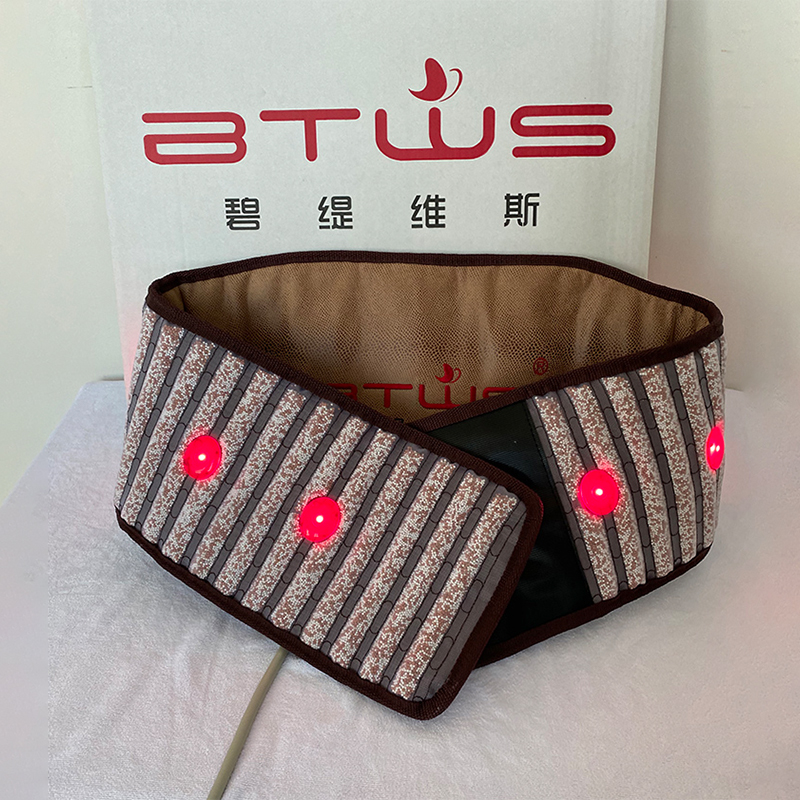
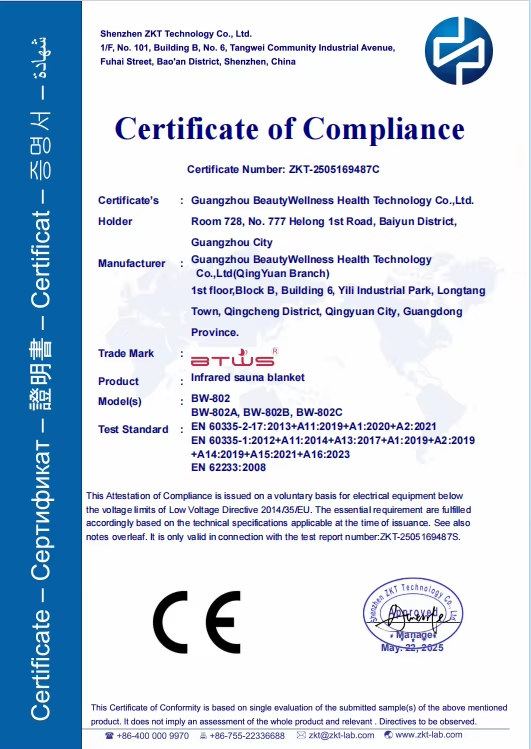
Electrical safety testing complements thermal analysis. Connecting heating assemblies to handheld controllers for 1-60 minute cycle runs tests relay stability, thermostat response, and 60W power output consistency. Compliance evaluations structured around recognized international standards—including CE, FCC, UKCA, and RoHS certifications—ensure that potential insulation failures or wiring faults are isolated prior to mass manufacturing.
Data/Solution Comparison
The following table outlines standard sample test methods used to isolate electrical and thermal defects prior to mass production clearance:
| Test Method | Defect Identified | Primary Component Evaluated | Pass/Fail Technical Metric |
|---|---|---|---|
| Infrared Thermal Imaging | Uneven heat spread, cold spots, localized thermal concentration | Carbon fiber heating element layout | Surface temperature variance ≤ ±3°C across heating zone |
| Flexural Strain & Bending Test | Internal conductor fracture, solder joint fatigue, crimp separation | Wiring connections, handheld controller harness | 100% electrical continuity maintained through 5,000 flex cycles |
| Dielectric Insulation Withstand | Insulation breakdown, electrical leakage, short-circuit hazard | 100-240V power supply input & internal wiring | Leakage current < 0.5 mA under high-voltage dielectric stress |
| Continuous Burn-In Thermal Test | Thermal decay, timer failure, controller drift over time | 60W heating system & control circuitry | Zero wattage loss and stable temperature output during continuous 60-min runs |
Frequently Asked Questions (FAQ)
Q1: How does thermal imaging reveal hidden wiring flaws in heating samples?
A1: Infrared thermography maps thermal emission patterns across the product surface. Areas with damaged or narrowed carbon fiber wires create high electrical resistance, appearing as bright hot spots, while broken wires appear as cold zones with no thermal activity.
Q2: Why is flexural strain testing necessary for wearable heating belts and sauna gear?
A2: Wearable heating products experience regular bending and folding during daily use. Strain testing simulates real-world stress on internal wiring and solder connections to ensure conductors do not snap or loosen under repetitive motion.
Q3: What electrical testing parameters prevent short circuits before batch assembly?
A3: High-voltage withstand tests and insulation resistance checks evaluate the dielectric strength between live heating wires and external fabric layers, ensuring complete protection against leakage currents under standard operating voltages.
Final Conclusion & Recommendations
Executing sample testing through infrared thermography, bending strain endurance, and dielectric withstand checks eliminates weak wiring and uneven heating risks before initiating mass production. Standardizing carbon fiber heating wire quality and applying 100% finished product inspection protocols guarantees consistent heat delivery across commercial supply channels. Manufacturer business models supporting factory direct supply, OEM/ODM customization, and small batch sample validation enable reliable scaling for global markets. For detailed technical solutions or support, please reach out to us via alina@beauty-wellness.cc.
About Us
Guangzhou Beautywellness Health Technology Co., Ltd. is a specialized manufacturer of far-infrared heating sauna series and thermal wellness equipment. Established in 2018, the company operates a 4,000 square meter factory facility supported by 60 employees and a dedicated R&D team of five professional engineers. Products hold international certifications including CE, FCC, UKCA, RoHS, and 3C, alongside National High-tech Enterprise recognition, supplying clients across Europe, the Americas, and global distribution networks.

Lastest
-
Can you ship infrared sauna blankets directly to our third-party warehouse in the US using DDP?
2026-10-03 -
How can we verify the safety certifications of your infrared sauna blanket for the UK market?
2026-10-03 -
Can you customize the controller and packaging box of the infrared sauna blanket with our artwork?
2026-10-03 -
What is the minimum order quantity if I want to source infrared sauna blankets with custom sizes?
2026-10-03 -
What is the warranty period for the heating elements in your infrared sauna blankets?
2026-10-03
SUBSCRIBE
INQUIRY