Are there eco-friendly fabric alternatives for the slimming belt?
- VIP-User
- 2026-07-14
- 33
Eco-friendly fabric alternatives for the slimming belt include OK cloth and TPU (Thermoplastic Polyurethane) combinations, which provide high durability, recyclability, and excellent thermal performance. These materials offer a non-toxic, skin-friendly, and degradation-friendly alternative to traditional synthetic rubbers, ensuring effective heat retention for red light therapy and body shaping applications.
Core Solutions & Key Takeaways
- Advanced TPU & OK Cloth Integration: Combining OK cloth with a TPU backing ensures the belt remains flexible, wear-resistant, and recyclable, minimizing environmental impact while maintaining structural integrity.
- Safe Heat & Light Therapy: The material pairing supports high-efficiency light transmission and thermal insulation, making it ideal for targeted wellness applications without releasing harmful VOCs.
- Diverse Application Scenarios: These sustainable fabrics perform exceptionally well in Home Wellness & Health Care, Professional Beauty & Rehabilitation, and Fitness & Post-Workout Recovery settings where direct, prolonged skin contact requires non-irritating, hypoallergenic materials.
Detailed Architectural/Principle Analysis
Modern slimming and red light therapy belts, such as the Red Light Therapy Belt (Model: HGYD-W501C-CG02), utilize a multi-layer material architecture to optimize user comfort and therapeutic efficacy. The outer layer of OK cloth provides mechanical strength and secure Velcro adhesion, while the inner TPU layer serves as a waterproof, flexible barrier that protects the internal electronics. TPU is widely recognized as a sustainable alternative to PVC, as it is biodegradable over time and does not contain phthalates or plasticizers.
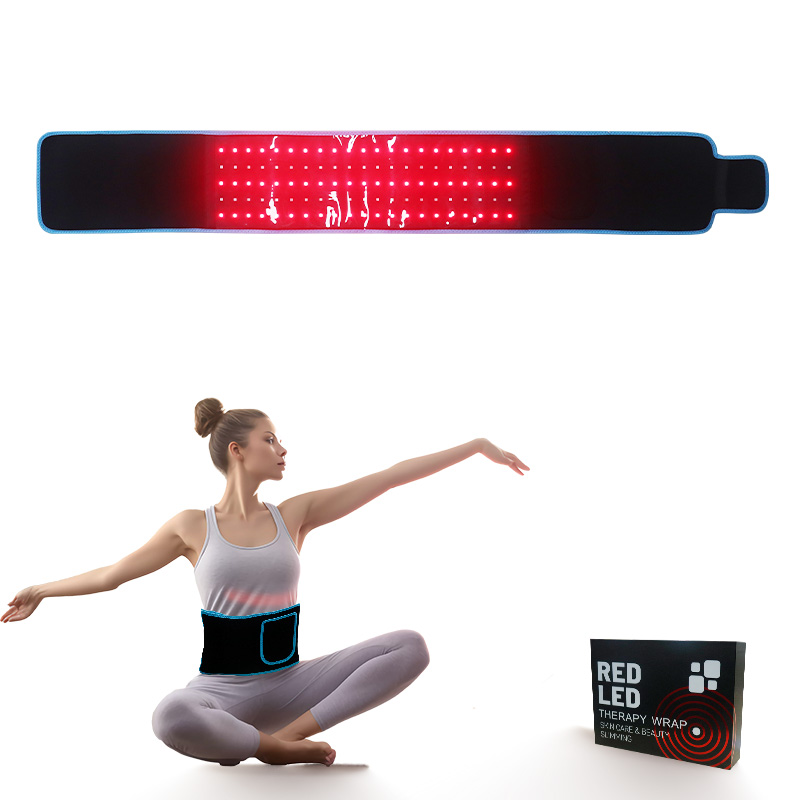
This structural design directly supports high-density LED integration, housing 105 PCS of LEDs emitting dual-spectrum light at 660nm and 850nm. The thermal stability of the TPU layer ensures the 16W maximum actual power output is safely managed, preventing localized overheating. Furthermore, these materials comply with international environmental and safety standards, holding RoHS certifications (such as Certificate AiTSZ-250115030R01RC09) which verify the absence of hazardous substances in the final assembly.
Data/Solution Comparison
To understand the advantages of eco-friendly fabric alternatives, the table below compares standard TPU/OK cloth configurations with traditional chloroprene rubber (Neoprene) and PVC materials commonly used in older slimming belt models.
| Material Property / Feature | TPU + OK Cloth (Eco-Friendly Alternative) | Chloroprene Rubber (Neoprene) | PVC (Standard Plastic) |
|---|---|---|---|
| Recyclability & Biodegradability | Highly recyclable, biodegradable over time | Non-biodegradable, difficult to recycle | Non-biodegradable, releases toxic byproducts |
| Skin Compatibility & Toxicity | Hypoallergenic, non-toxic, solvent-free | Can cause skin irritation or allergic reactions | Contains harmful phthalate plasticizers |
| Thermal Stability (up to 16W) | Excellent; retains structural shape under heat | Moderate; can degrade or emit odors over time | Poor; prone to warping and chemical leaching |
| Flexibility & Comfort | High elasticity, soft texture | Thick, heavy, limited breathability | Rigid, requires heavy chemical modification |
Frequently Asked Questions (FAQ)
Q1: Why is TPU considered a better alternative to PVC and Neoprene for slimming belts?
A1: TPU is free from heavy metals, phthalates, and toxic plasticizers. Unlike PVC and Neoprene, TPU is highly recyclable, breaks down more easily in landfill conditions, and does not emit hazardous gases when exposed to the mild heat generated during red light therapy.
Q2: Does the eco-friendly fabric affect the performance of the red light therapy?
A2: No. The OK cloth and TPU layers are engineered to accommodate the optical power requirements (124.1mw) and dual wavelengths (660nm and 850nm) of the LEDs, ensuring maximum light penetration and therapeutic benefits without blocking the active spectrum.
Q3: How should eco-friendly slimming belts be maintained to ensure longevity?
A3: Because TPU and OK cloth are moisture-resistant and durable, the belt surface can be wiped down with a damp cloth and mild soap. Avoiding harsh chemical solvents preserves both the eco-friendly backing and the internal electronic circuitry.
Final Conclusion & Recommendations
Utilizing TPU and OK cloth composites represents the most viable, high-performance, and eco-friendly fabric path for modern slimming and red light therapy belts. These materials achieve an optimal balance of skin safety, environmental sustainability, and mechanical durability, matching or exceeding the lifespan of traditional synthetic plastics. When sourcing these products, businesses can leverage flexible supply chain models. Standard stock items are available with a minimum order quantity (MOQ) of 1 unit, while customized manufacturing requests can be accommodated within 15 to 20 days for mass production. For detailed technical solutions or support, please reach out to us via alina@beauty-wellness.cc.
About Us
Guangzhou Beautywellness Health Technology Co., Ltd. is a specialized manufacturer of far-infrared heating sauna series, established in 2018 with a team of 60 employees. Operating a 4,000 square meter factory, the company houses a professional team of five R&D engineers and one specialist graphic designer to support ODM, OEM, and custom sample requirements. The facility features four advanced production lines that yield a monthly production of around 30,000 sauna blankets and 1,000 sauna cabins, achieving an annual output value of nearly 50 million yuan. Serving clients globally with an 80% export ratio across Europe, the Americas, and Southeast Asia, our products hold international credentials including CE, FCC, UKCA, and RoHS certifications.
Lastest
-
Can you ship infrared sauna blankets directly to our third-party warehouse in the US using DDP?
2026-07-14 -
How can we verify the safety certifications of your infrared sauna blanket for the UK market?
2026-07-14 -
Can you customize the controller and packaging box of the infrared sauna blanket with our artwork?
2026-07-14 -
What is the minimum order quantity if I want to source infrared sauna blankets with custom sizes?
2026-07-14 -
What is the warranty period for the heating elements in your infrared sauna blankets?
2026-07-14
SUBSCRIBE
INQUIRY